
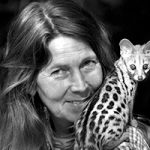
In my early years as a botanist, I filled notebooks with measurements and observations, but felt no closer to the plants I was studying. Scientific methodologies, while producing many fascinating facts, do not provide a bridge between human beings and nature. They hold plants at arm’s length, keeping the scientist at a safe distance from the green beings.
I longed to cultivate a deeper relationship with living plants, and thought I might achieve this by learning how people from outside the Western scientific paradigm come to know nature. Therefore, I turned to ethnobotany, focusing on indigenous knowledge.
For some years, I was envious of Afrikan herbalists and their mysterious ways of knowing! I suspected that they had techniques for communicating with nature, and I wanted to know their secrets. Would I have access to the old ways, as a non-indigenous person – or was it just my bad luck to be born on the north-west fringe of Europe and educated in Western science?
How do we define ‘indigenous knowledge’? I think of it as knowledge held by a particular group of people who have lived in the same place for a long time; these people know their place in a unique way, specific to their culture. Indigenous people identify themselves as being native to a land with which they have strong links, and there is a historical continuity with ancestors who pre-date colonial or invading societies.
My ancestors would have known the healing properties of native plants; my 100-year-old aunt from the Scottish Highlands still remembers eating from the hedgerows and using traditional herbal remedies for ailments. Could I be considered to be indigenous to that part of the world, or has the loss of age-old knowledge been so comprehensive that there is no longer a distinctive ‘culture’ to belong to?
Loss of indigenous knowledge is an issue of deep concern in Afrika. In the past 10 years in Zambia, I have often been asked to record traditional plant uses and local names, ‘before it’s too late’. This plea comes from a generation who learned about their culture from their grandparents, but whose grandchildren are being born into a globalised society in which traditional healing practices are rejected as old-fashioned. This is a symptom of a widening chasm, a separation from our roots in nature, and a concomitant crisis in the human spirit.
Another symptom is the rapacious exploitation of the Earth, the rapid and brutal extraction of materials without regard for the intricate and ancient relationships which support all life. In the face of such destruction, however, some researchers are beginning to turn to the old ways, seeking earth wisdom.
Can indigenous knowledge come to the rescue? Can we find solutions to our current ecological crises by tapping into a broader knowledge base than that of modernist science? More poignantly, are the indigenous elders prepared to share what they know with researchers who have not shown proper regard for their wisdom in the past?
Traditional practitioners from all around the world – shamans, sangomas, and healers from indigenous cultures – report that they learn directly from the world, as well as from elders: dreams, visions, and intuitive knowledge are their sources. Could we all come to know the natural world in this way?
I believe that we could develop our innate abilities, and become more directly aware of our connections to the living world. For aren’t we all indigenous to the Earth, regardless of our specific culture? Wherever we live can become our home; if we stay a while, we may come to know the place intimately. By paying attention to how plants express their inner natures, we can discover and appreciate their inherent qualities and healing properties. Thus, even if we forget what our ancestors knew, all is not lost, for the plants can teach us again.
While we grieve for the rapid loss of biodiversity, and the extinction of age-old human cultures, perhaps we can open to the possibility that modern human beings, indigenous or otherwise, may come to know nature more deeply, and thus find ways of healing ourselves and our relationship with the Earth.

